
Hard times · Losing a loved one
Explaining Death to a Young Child
Simple words, and room for grief that comes in sideways.
October 1, 2026 · 5 min read

By the BananaBook team
In short: there's no single right way to talk about death with a child — only ways that leave them a little less alone. What many families observe is that simple, clear words confuse young children less than softened images ("gone", "asleep"), which they take literally. For the harder questions, a grief professional who works with children can help.
Simple words, and room for grief that comes in sideways.
There's no easy version of this conversation. There are only versions that leave the child less lost. And let's say it plainly: we are not doctors or psychologists, and these words belong to each family. What follows isn't a set of instructions — simply what those who've been through it often describe.
Many notice that softened language — gone, lost, asleep — mostly serves the adult's comfort, and that young children take it literally: a grandmother who "fell asleep" can make bedtime frightening, and someone "lost" might, in their mind, be found. Clear words, even hard ones, often leave less room for anxiety.
They also notice that little ones ask the same question again weeks later, to check — and that an answer that doesn't change reassures them. That between three and seven, children often believe they caused what happened, without daring to say so. And that their grief comes in short waves: ten minutes of tears, then the urge to play. It isn't lightness — it's all they can carry at once.
Many families also fear that forgetting is part of death. Saying the name, telling the stories, keeping a photo at a child's height — all of it seems to say that love, at least, outlives the person.
What a book can offer here, where conversation sometimes runs out of words, is a place to return to — as often as the child needs, at their own pace, without an adult having to find the words while their own grief is raw. That's what [The Light That Stays](→ book link) gently offers.
And if a child stops eating or sleeping, regresses lastingly, or seems stuck, seeing a grief professional who works with children is far from an overreaction — it's valuable.
Frequently asked questions
Should I use the word "died" rather than "gone"?
Many families and professionals find that clear words confuse young children less than euphemisms, which are taken literally. But it's for each parent to find their own words.
Why does my child cry, then want to play?
Young children grieve in short waves, because that's all they can carry at once. It isn't indifference.
How can a book help?
It offers a place to return to at the child's own pace, as often as needed — a starting point when words, in the moment, run out.
When should I see a professional?
If the child stops eating or sleeping, regresses lastingly, or seems stuck, a grief professional who works with children can help. Asking is not an overreaction.
More from the Journal
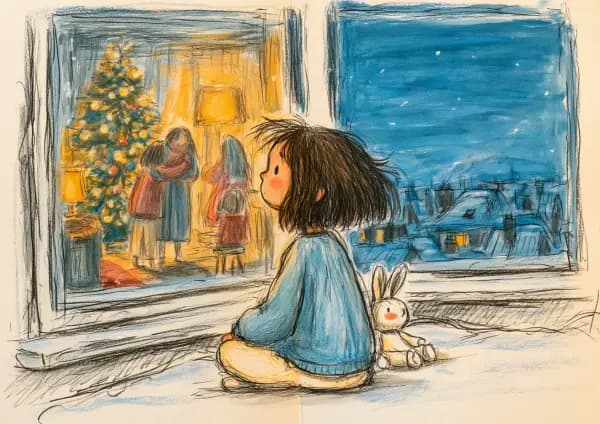
Big questions
Is Father Christmas Real? How to Answer Your Child
Your child is starting to doubt Father Christmas? How to answer with honesty, without lying and without breaking the magic — a gentle approach for parents.
1 related story Read

Sleep
When the Nightmares Keep Coming Back
Awake at 3 a.m., the same dream again.
1 related story Read
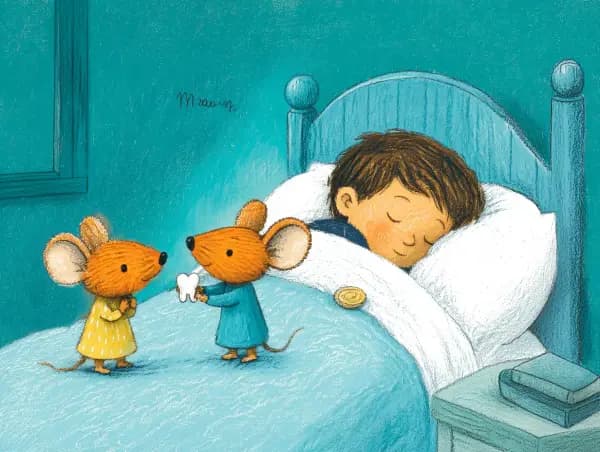
Big milestones
The First Milk Tooth Starts to Wobble
Half excitement, half worry.
1 related story Read